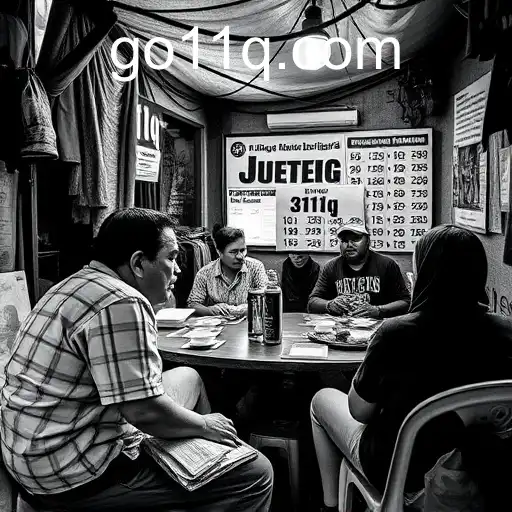
Understanding Jueteng: A Social and Cultural Phenomenon
Jueteng remains one of the most entrenched illicit enterprises in the Philippines, often embroiled in societal debates, economic discussions, and political discourse. This complex, unregulated numbers game is, for better or worse, deeply embedded in the cultural fabric of many Filipino communities. Here, we delve into its multifaceted nature, its implications on society, and its relation to the enigmatic "11q" that garners both intrigue and controversy.
The Origins and Mechanics of Jueteng
The origins of Jueteng can be traced back to the Spanish colonial era, with the game evolving over centuries to maintain its relevance across Philippine society. The game typically involves bettors choosing a combination of numbers, with winning numbers drawn at random. Despite its illegality, the game persists, fueled by its simplicity, the allure of quick rewards, and its roots in local traditions. The structure of Jueteng is sustained through a network of cabos (bookkeepers) and kubradors (bet collectors), creating a complex, decentralized ecosystem that is surprisingly resilient against legal prohibitions.
Social Dynamics and Jueteng's Entrenchment
Despite efforts by law enforcement to abolish Jueteng, it remains deeply entrenched within many communities. Its proliferation is often attributed to economic necessity, with participants engaging not only for potential financial gain but as a form of social participation. In areas where economic opportunities may be scarce, Jueteng provides a livelihood for many, from the operators to those placing bets. This intertwining of economics, community ties, and recreation complicates efforts to eradicate the activity entirely.
The Role of 11q and Political Intricacies
Within the discourse on Jueteng, the term "11q" occasionally surfaces, adding layers of complexity to its narrative. While "11q" isn't explicitly defined in public channels, it often relates to theories and discussions revolving around hidden patterns and alleged systemic structures within Jueteng operations. This aspect hints at a sophisticated tier of management and governance that suggests a deep-rooted connection to larger political and economic systems within the Philippines. The speculation regarding the involvement of higher echelons of power in Jueteng's perpetuation includes allegations of political figures benefiting from protection fees or having vested interests in its operation.
Impact of Jueteng on Governance and Law Enforcement
Jueteng's persistence highlights the challenges faced by governance and law enforcement in the Philippines. The game implicates not just small-time operators and participants but also local and national figures. Corruption allegations frequently arise, with officials accused of turning a blind eye or profiting from the system. Moreover, the reality of Jueteng showcases the difficulty in enforcing laws across a diverse and decentralized nation where local customs and economic practices vary widely.
Public Perception and Cultural Acceptance
Public perception of Jueteng is complex; for many, it is a victimless crime, a part of everyday life that offers hope, however fleeting. The cultural acceptance can be attributed to Jueteng's historical presence and perceived harmlessness compared to other illegal activities. While the government attempts to promote legal alternatives like the Philippine Charity Sweepstakes Office’s (PCSO) lottery games, Jueteng thrives on immediacy, accessibility, and personal ties among community members.
Jueteng and Its Economic Undercurrents
The economic fabric of regions where Jueteng is prevalent is subtly influenced by its operations. The constant flow of cash through Jueteng betting creates informal economies, where daily sustenance for families might often depend on its existence. This economic dependency complicates efforts for reform, as any systemic crackdown could have immediate and severe socio-economic consequences. Replacement of Jueteng with formal, regulated gambling has been a policy consideration, though execution and acceptance remain significant challenges.
Efforts for Reform and the Way Forward
To address the complexities of Jueteng, a balanced approach that considers both legal reform and socio-economic factors is necessary. Discussions often include legislative measures aimed at tightening regulations while exploring sustainable socio-economic reforms to provide alternatives. These could involve enhancing livelihood programs, fostering education, and involving communities in meaningful ways that diminish the lure and dependency on Jueteng. Furthermore, continued dialogue around the mysterious "11q" aspect may shine light on the hidden influences that dictate the operations of Jueteng, potentially unraveling broader systemic issues within illicit networks.
The Continuing Saga
Jueteng, despite its negative connotations, remains a testament to the complexity of illegal gambling intertwined with cultural resilience and economic realities. As long as broader economic and social issues persist, Jueteng will likely continue to thrive, providing a lens through which we can examine the intricate intersection of tradition, need, and governance. What remains essential is understanding that Jueteng is more than a mere gamble – it's a reflection of nuanced socio-cultural dynamics demanding more than simple eradication, calling for thoughtful engagement and sustained reform efforts.